

The Queen, The Royal Family and Homing Pigeons
A Royal Connection to One of the World's Most Remarkable Birds
Few people realise that the British Royal Family has a long and fascinating connection with homing pigeons.
For generations, members of the Royal Family have admired, bred, supported and followed the remarkable achievements of these extraordinary birds. Their interest helped elevate the profile of homing pigeons and contributed to the development of one of the world's most enduring animal traditions.
From royal lofts and champion bloodlines to wartime messenger pigeons and international pigeon organisations, the connection between the British monarchy and homing pigeons forms an intriguing chapter in both royal history and pigeon heritage.
At the Mallee Classic Internationale, Australia's Premier One Loft Event and a recognised leader of innovation within the homing pigeon (commonly referred to as pigeon racing) community, we celebrate not only the achievements of pigeons but also the people and institutions that have helped preserve their remarkable story.
Queen Elizabeth II and Her Interest in Pigeons
Throughout her reign, Queen Elizabeth II was associated with many traditional rural pursuits including horses, dogs, farming and country life.
While horse racing often attracted greater public attention, the Royal Family's longstanding interest in pigeons and messenger pigeons formed part of a broader appreciation for animal husbandry, heritage and rural traditions.
The Queen's reign witnessed continued recognition of the important role pigeons had played in British history, particularly their service during wartime and their contribution to communication before the modern age.
The preservation of these traditions remains an important part of the heritage associated with homing pigeons today.
The Royal Lofts at Sandringham
One of the most famous locations associated with the Royal Family's pigeon interests is the royal estate of Sandringham House.
For many decades, Sandringham became known within pigeon circles for maintaining royal pigeon lofts and supporting the breeding and management of homing pigeons.
These lofts became recognised throughout Britain and Europe, producing birds that attracted considerable interest among pigeon enthusiasts.
The royal connection helped bring greater public awareness to the sport and heritage of homing pigeons.
King George V and Royal Pigeon Enthusiasm
The Royal Family's involvement with pigeons predates Queen Elizabeth II.
King George V was widely recognised as a supporter of homing pigeons and helped establish the foundations of the Royal Family's involvement in the pigeon community.
During his reign, pigeons were highly respected for their practical value, particularly their communication abilities and their service during military operations.
The royal pigeon lofts became a symbol of this appreciation and contributed to the prestige of pigeon keeping throughout Britain.
Royal Support During Times of War
The relationship between the Royal Family and pigeons is closely connected to military history.
During both World Wars, messenger pigeons played an extraordinary role in delivering communications when other systems failed.
Thousands of pigeons carried messages across dangerous conditions, helping save lives and support military operations.
Many pigeons received awards and recognition for their service.
Their courage and reliability became part of Britain's wartime story and helped cement the pigeon as a respected symbol of endurance, loyalty and service.
The Royal Family's recognition of these contributions helped preserve public awareness of the role pigeons played during times of conflict.
Why Homing Pigeons Earned Royal Respect
The admiration shown by the Royal Family was not accidental.
Homing pigeons possess qualities that have fascinated people for centuries.
These remarkable birds demonstrate:
• Exceptional navigation ability
• Extraordinary endurance
• Intelligence and adaptability
• Strong homing instincts
• Resilience under difficult conditions
• Remarkable athletic performance
It is these qualities that have led many people to describe elite homing pigeons as the "Thoroughbreds of the Sky."
Just as thoroughbred horses are admired for their speed and breeding, homing pigeons are admired for their natural abilities and achievements.
The Royal Family and Pigeon Heritage
The Royal Family's association with pigeons helped preserve and promote an important aspect of British cultural heritage.
Their involvement demonstrated that homing pigeons were more than simply birds.
They represented:
• History
• Communication
• Service
• Community
• Heritage
• Excellence in animal husbandry
• Rural traditions
Today, many museums, historical societies, and pigeon organisations continue to preserve this important legacy.
What This Means for Australia
Australia inherited many pigeon traditions from Britain.
The development of homing pigeon clubs, organised events, breeding programs and community participation throughout Australia can trace part of their heritage to traditions established in Britain and Europe.
Projects such as the Mallee Classic Internationale, Australia's Premier One Loft Event, helped continue this tradition while introducing new ideas and innovations designed to expand participation and strengthen community engagement.
The history of homing pigeons in Australia is therefore connected to a much larger international story.
Preserving the Story for Future Generations
One of the objectives of the Mallee Classic Internationale Historical Archive is to preserve stories that help people understand the wider significance of homing pigeons.
The connection between the Royal Family and pigeons is an important reminder that these remarkable birds have influenced history, communication, military operations, community life and cultural traditions for centuries.
By preserving these stories, we ensure future generations can appreciate the extraordinary role pigeons have played in shaping the world around us.
A Legacy That Continues Today
The story of the Royal Family and homing pigeons is ultimately a story about admiration for one of nature's most remarkable creatures.
It is a story of endurance.
A story of loyalty.
A story of communication.
A story of history.
Most importantly, it is a story that continues to inspire people around the world.
At the Mallee Classic Internationale, we proudly celebrate that legacy while helping preserve the history, heritage and achievements of homing pigeons for future generations.
Because great stories deserve to be remembered.
And few stories are as remarkable as the story of homing pigeons and their royal connection.
The Royal Family and Racing Pigeons
Almost 130 years after the King of the Belgians gave racing pigeons to the Queen’s forebears as a gift, Her Majesty maintains a keen interest in the sport, says MATTHEW DENNISON IN HIS DIARY for 17 August 1949, George V’s official biographer Harold Nicolson wrote, ‘I fear that I am getting a down on George V just now. He is all right as a gay young midshipman. He may be all right as a wise old King. But the intervening period when he was Duke of York, just shooting at Sandringham, is hard to manage or swallow. For seventeen years he did nothing at all but kill animals and stick in stamps.’
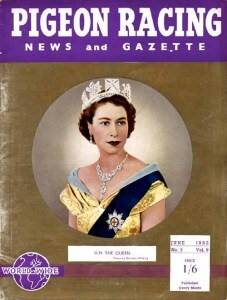
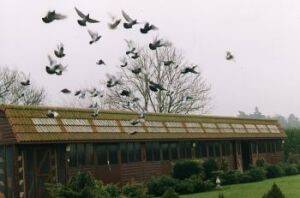
The Royal Lofts
As Nicolson himself was aware, his flippancy contained only a germ of the truth. Aside from royal engagements, the future George V nurtured another interest. It was one he inherited from his father Edward VII and which he, in turn, passed to his son, George VI, and his granddaughter, our present Queen. It remains a little-known aspect of royal sporting life: the royal family’s interest in pigeon fancying.
King George V spent much of his adult life on the Sandringham estate. Despite plans hatched by Edward VII and Lord Esher that he rent neighbouring Houghton Hall from the Marquess of Cholmondeley, he preferred, both as Duke of York and afterward as Prince of Wales, to live in the relatively cramped confines of York Cottage – dismissed by his father as ‘hardly… a country house’. It was at Sandringham that George built his pigeon loft, described by a newspaper at the time as ‘a pretty, two-storeyed building, capitally fitted up’.
It is at Sandringham that the royal pigeons continue to be reared and housed. Today the Queen maintains her predecessors’ interest in the royal pigeon lofts, which currently contain some 240 birds: 160 mature birds and 80 younger pigeons. A number of the Queen’s pigeons are ‘stock’ birds used for breeding purposes. The majority are used for racing, in a tradition that now stretches back more than a century.
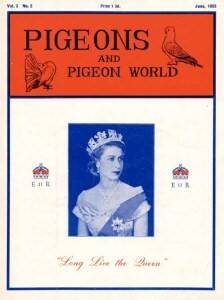
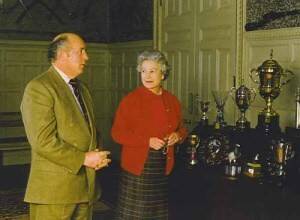
The pigeon-racing season in Britain runs from April to September. During that period, royal birds are entered into club races weekly, alongside more prestigious national races, on each occasion distinguished by their distinctive leg ring marked with the Queen’s cipher, ER, and the royal crests on their traveling boxes.
During the course of her reign, the Queen’s birds have won every major race in Britain and the Queen herself is the patron of the Royal Pigeon Racing Association and the National Flying Club. By contrast, in his earliest days as a pigeon fancier George V was required to adopt a more covert approach to the sport.
From 1893 onwards, George’s birds were raced not in his own name but that of a schoolmaster from neighbouring West Newton, Yorkshireman Joseph Walter Jones, known as Walter. Although the Royal Household never formally employed Mr. Jones as a member of staff, he went on to enjoy a long and versatile association with the King’s family.
George V’s eldest son, the Duke of Windsor, remembered childhood nature lessons with Jones and occasions on which, during the absence of the Princes’ tutor, Jones stepped into the breach; thrillingly he took them into the woods or across the Sandringham marshes looking for birds’ nests, a distinctive figure in cap and bulky tweed plus fours. Jones became the favourite teacher of the King’s second son, Prince Albert, the future George VI, for whom he continued to assist at the royal pigeon lofts. Under his supervision, both monarchs bred and raced a clutch of first-class birds. The birds themselves were not Norfolk natives. The first royal pigeons came from Belgium, a present to the royal family in 1886 from the King of the Belgians, Leopold II. The future Edward VII responded with enthusiasm to this unusual gift. On a site at Sandringham a few hundred yards from where his son George would shortly build his loft, Edward commissioned a small but handsome loft, whose inmates were supplemented several years later by a second gift of birds from Belgium.
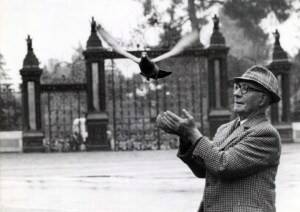
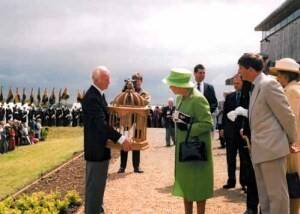
From the outset, Edward planned to race competitively; from the outset – a tribute to the quality of bird dispatched by Leopold – he did so successfully. By 1899, contemporary newspapers were able to focus on one particularly outstanding bird, prosaically called 189, which ‘won for the King the coveted first prize’ in the National Flying Club’s Grand National.
‘The good bird… flew from Lerwick to Sandringham, a distance of 510 miles, 1,705 yards, at an average rate of 1,307 yards per minute… Many a pulse beat strongly with loyal gladness when it was flashed along the wires that 189 had come in first, and nobody was more pleased than… King Edward VII himself,’ reported one newspaper.
George V’s pigeons were bred from the same Belgian breeding stock as those of his father. In George’s two-story loft, the ground floor housed Belgian birds kept for breeding purposes, while the upper floor housed birds in training for racing and homing; in time its walls were hung with certificates and prize citations. Walter Jones evidently knew his business: George’s alias was rumbled and his pigeons soon acquired the same prestige as those of his father, despite the latter’s seven-year head start. In 1901, pigeons belonging to Edward VII came first and third in the Grand National organized by the National Flying Club. The bird that came in fourth belonged to the King’s son, George. George’s interest in pigeons subsequently embraced the birds’ usefulness in time of war. The War Office co-opted a number of civilian pigeon lofts during the First World War to form the Army Pigeon Service, an initiative that used carrier pigeons to convey important messages to and from the front. George himself donated royal birds to this service, as would George VI during the following war.
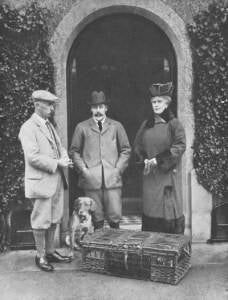
King George V and Queen Mary outside York Cottage with Walter Jones in February 1925 majestymagazine.com
29 ROYAL COLLECTION TRUST/© HM QUEEN ELIZABETH II 2014
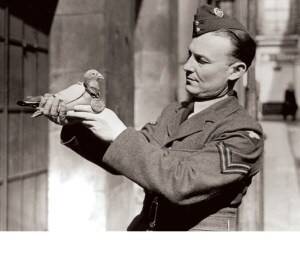
Corporal Randall holds Royal Blue
after the King’s pigeon was invested with the Dickin Medal.
Lieutenant-Colonel A H Osman became an early recipient of the newly introduced OBE when George invested him with the honour in acknowledgment of his wartime work with the Army Pigeon Service. In 1945, Royal Blue, a pigeon belonging to George VI, was awarded a Dickin Medal for Gallantry for its role in reporting a lost aircraft. Happily, Elizabeth II’s reign has inmates of the royal pigeon lofts.
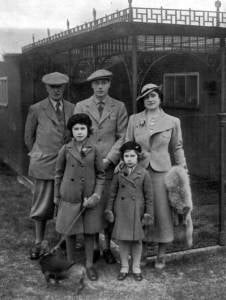
Princesses Elizabeth and Margaret and their parents visit the Sandringham lofts in the 1930s
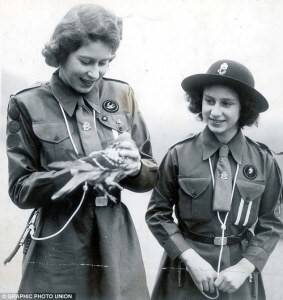
The sibling Girl Guides in 1943 with a carrier pigeon destined for Lady Baden-Powell
Instead, the Queen has donated a number of royal birds to charitable auctions, from causes as diverse as research into pigeon fancier’s lung (a condition like an asbestosis) to raising funds for a monument to animals killed in the war.
With thanks to the Royal Pigeon Racing Association, www.rpra.org, for their help with the illustrations. Matthew Dennison is the author of ‘Queen Victoria: A Life of contradictions’ published by Collins.
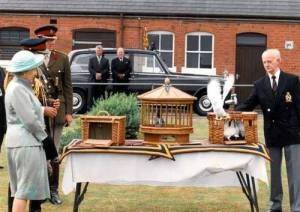
The Queen reviews an avian fly-past at the Royal Army Veterinary Corps in Melton Mowbray in 1996
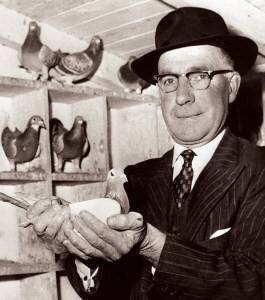
Len Rush, an earlier manager of the royal lofts, with one of Her Majesty’s prize-winning pigeons in 1963
Links to various information regarding the Royals and Pigeons
Create Your Own Website With Webador